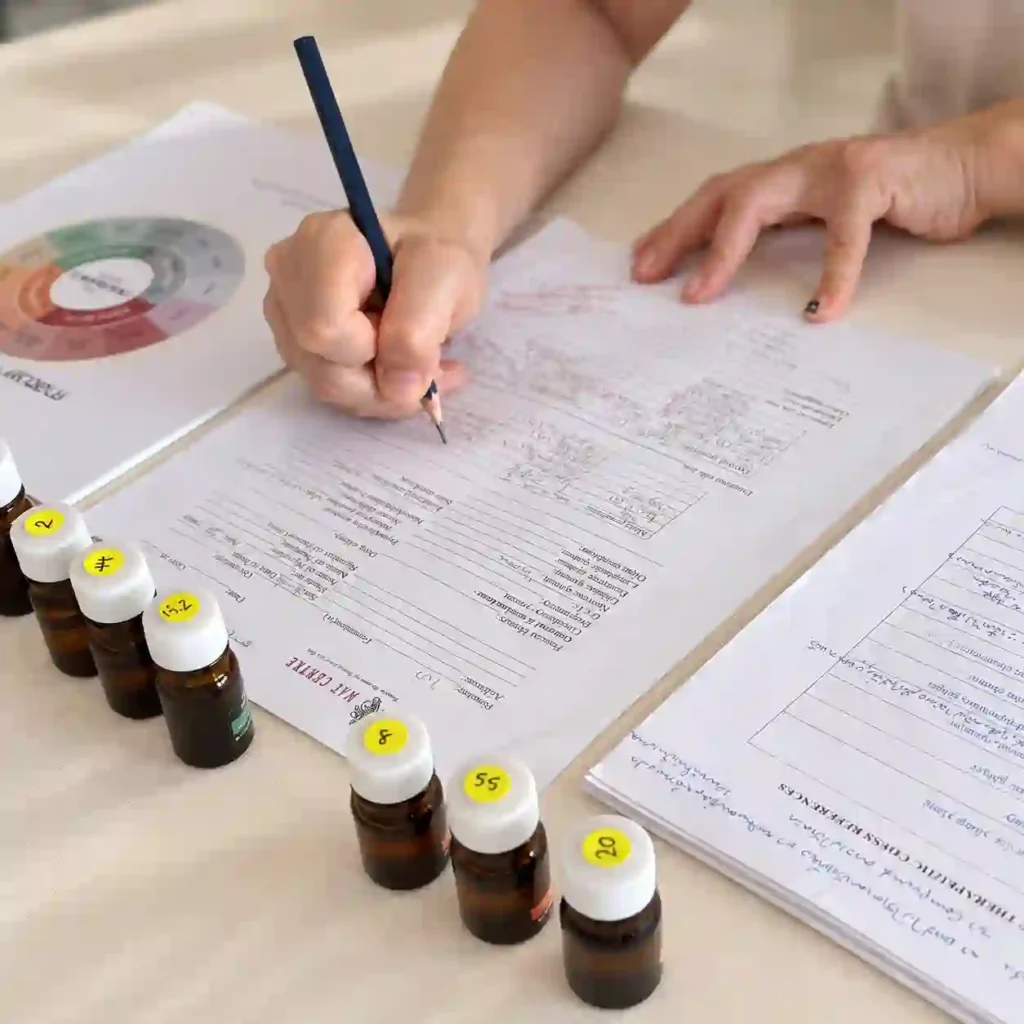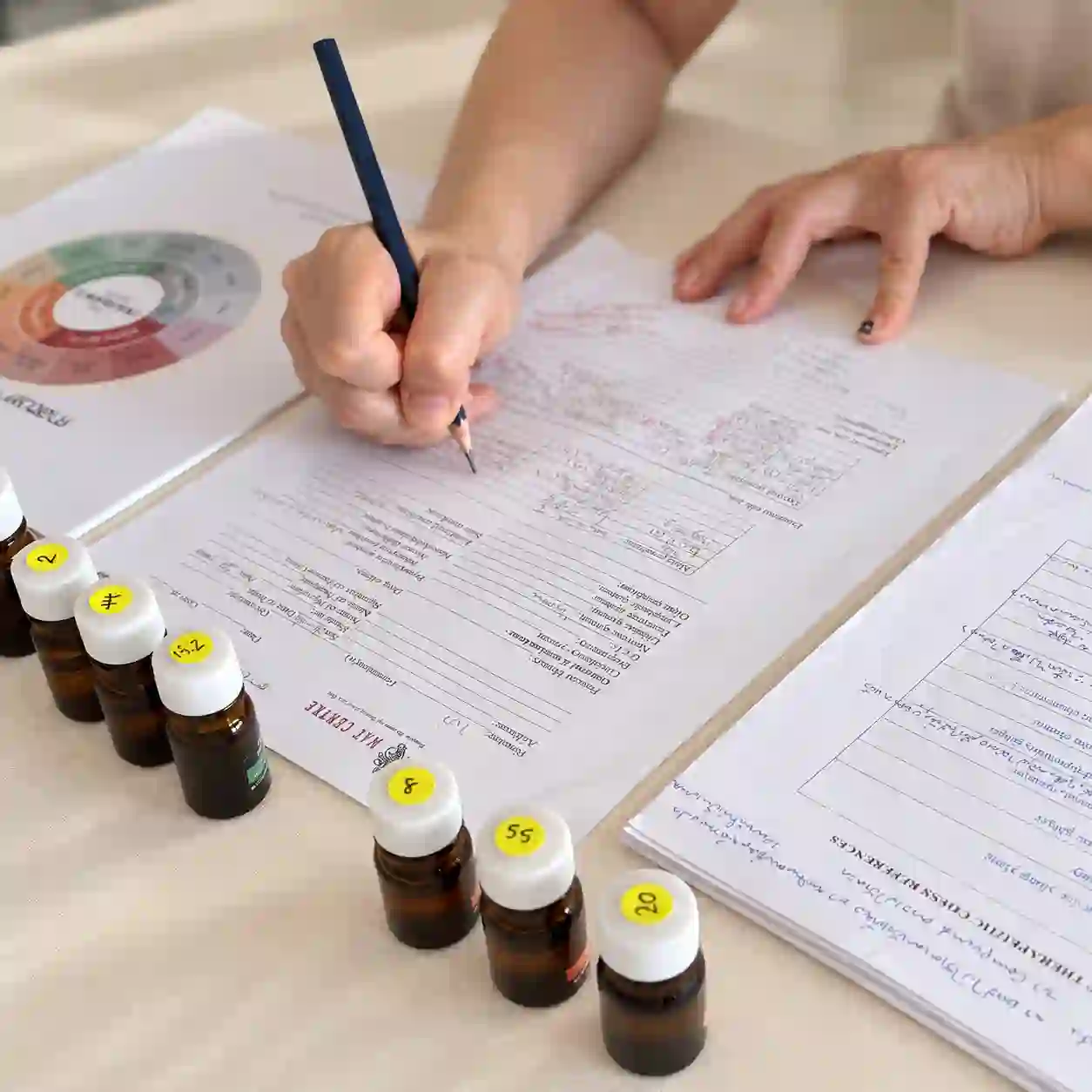
As I learned more, I discovered that the answer to “Can natural essential oils cause allergies?” is yes. Even substances that come from nature can cause allergic reactions or irritation in some people.
I used to believe that natural ingredients were likely to be gentler and less likely to cause allergies, especially when it came to fragrance. I have allergies and am quite sensitive to smells, so I tend to choose products with a mild scent or no fragrance at all.
When I first became interested in essential oils, I thought that pure, natural essential oils would probably suit me. But as I studied fragrance and essential oils more closely, I learned that natural ingredients can also cause allergic reactions or irritation. This was another discovery that changed how I approach AROMAYU.
Can Natural Essential Oils Cause Allergies?
The word “natural” tells us where an ingredient comes from. It does not mean that the ingredient cannot cause an allergic reaction or irritation. An essential oil is not a single substance. It is a naturally occurring mixture of many different compounds, and some essential oils may contain more than 100 constituents. Some of these can trigger allergic contact dermatitis in certain people. DermNet®
When I understood this, I immediately thought of food. Nuts, milk, seafood, and fruit all come from nature.One person may eat them without any problems, while another may be allergic.Natural ingredients do not affect everyone in the same way.The same is true of essential oils.

At first, I thought of essential oils simply as scents extracted from plants.
As I continued learning, I began to see them differently. A single small bottle contains many natural compounds, such as limonene, linalool, geraniol, citral, or eugenol, in proportions that vary from one essential oil to another. These constituents help give each plant its distinctive scent and properties. At the same time, some may have restrictions on their use or cause irritation or allergic reactions in certain people. That was when I began to understand something important:
When considering how gentle a fragrance is, we cannot rely on the word “natural” alone.
Are Allergies and Irritation the Same Thing?
These terms are often used interchangeably, but they describe different things. Irritation occurs when a substance directly irritates the skin. Its concentration, the amount used, and the duration of contact all play a role. On the other hand, allergic contact dermatitis involves an immune response after the body has become sensitized to a substance. Symptoms of allergic contact dermatitis typically appear around 24–72 hours after exposure and may include itching, redness, or peeling skin. DermNet® So when someone says,“It stings when I use it, so I must be allergic,” that conclusion may be premature. The reaction could be irritation, or it could be an allergy.
With 100% Pure Essential Oils, Understanding How to Use Them Matters Even More
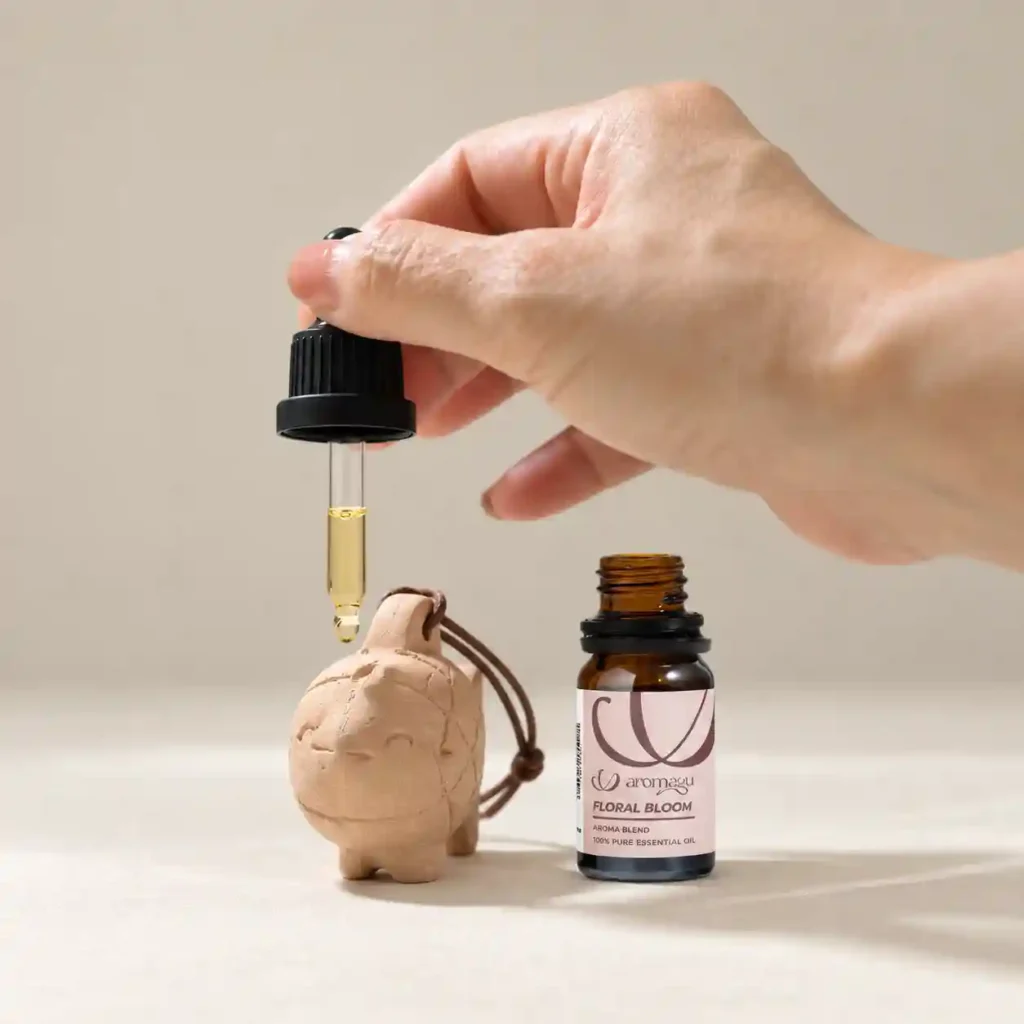
Another lesson I learned is that “100% pure essential oil” does not mean we can use as much as we like. Essential oils are highly concentrated. Appropriate use depends on the type of oil, the amount used, and the form of the product. Some are suitable for diffusion. Some can be used on the skin when properly diluted. And people may respond differently to the same scent or essential oil.For me,the question is therefore not only “Which essential oil are we using?” It is also “How much are we using? How are we using it? And is it suitable for that purpose?”
From “Is It Natural?” to “How Should It Be Used?”
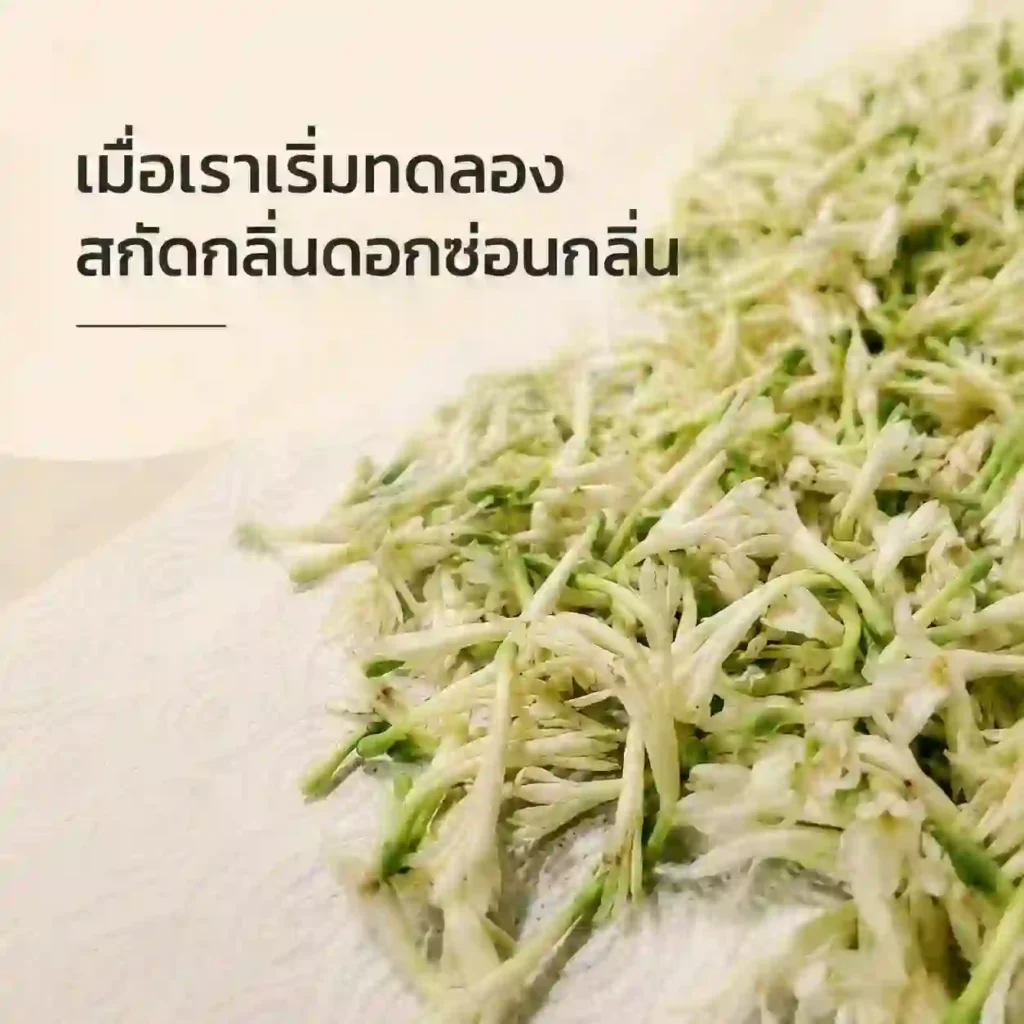
When choosing a product, I used to ask first whether it was natural. But the more I learned about essential oils, the more I realized that being natural does not make something suitable for everyone. I had encountered a similar lesson while experimenting with extracting scent from fresh tuberose flowers . That experience showed me that natural materials have their own complexities, and the results are not always what we expect.We also need to consider what an oil contains, how it is best used, how much to use, and what precautions apply. Gradually, my thinking shifted from “Is it natural?” to “How can it be used appropriately?” Even when an ingredient comes from nature, we still need to understand how to use it.
What Does IFRA Have to Do with Essential Oils?
As I began learning about fragrance creation, I became more familiar with IFRA, the International Fragrance Association. IFRA sets standards for the use of fragrance ingredients. Some standards prohibit certain ingredients,
some restrict the amounts that may be used, and others specify requirements for ingredient quality or purity, taking product type and the nature of exposure into account. IFRA Essential oils may contain constituents that are subject to IFRA restrictions. Being a natural ingredient does not mean that an oil can be used in any amount. IFRA This reminded me once again that choosing natural ingredients is only the beginning. Understanding how to use them appropriately matters just as much.
What If You Are Sensitive to Scents?
Another distinction I want to make is between an allergy and symptoms triggered by smelling a fragrance. Some people may experience headaches, nausea, discomfort, or find certain scents more bothersome than others do. Symptoms triggered by a smell do not necessarily indicate an immune-mediated allergy. For me, the meaning of
“a pleasant scent” changed considerably. A fragrance that one person finds wonderful may leave another indifferent, while someone else may want to leave the room altogether. I began to feel that saying “Everyone will love this scent”
does not really reflect how people experience fragrance.
Nature Still Has Value—We Just Need to Understand It Better
Learning all of this did not make me more afraid of nature. Instead, it deepened my respect for it. I began to see that each plant is more complex than I had imagined. A drop of essential oil is more than a pleasant scent from nature. It contains many different natural substances.
The better we understand it, the more appropriately we can choose to use it.
How This Became Part of AROMAYU’s Approach
We choose natural essential oils because we value botanical scents and the practice of Aromatherapy At the same time, we do not want the word “natural” to be our answer to everything.
What matters to us is knowing the ingredients we use, understanding their composition, appropriate usage levels, and limitations, and accepting that one scent will not suit everyone. I used to think,“If it’s natural, I probably won’t be allergic to it.” Today, I see it differently: Natural does not mean allergy-free. But the more we understand nature,the better we can choose how to use it.
Frequently Asked Questions About Essential Oils and Allergies
Yes. Essential oils contain many natural compounds, and some can trigger allergic contact dermatitis in certain people. Individual responses therefore vary. DermNet®
“100%” refers to the oil’s concentration or purity. It does not mean that every essential oil can be applied directly to the skin or that doing so is suitable for everyone. Appropriate use depends on the type of oil, its concentration, the method of application, and the precautions associated with that ingredient.
Irritation occurs when a substance directly irritates the skin. Allergic contact dermatitis is an immune response to a substance to which the body has already become sensitized. They involve different mechanisms.
Not necessarily. Symptoms triggered by smelling a fragrance are different from an immune-mediated allergy. If symptoms are severe, recur, or involve breathing problems, consult a doctor to assess the cause.
References
DermNet — Allergic Contact Dermatitis to Essential Oils
DermNet: Allergic contact dermatitis to essential oils
International Fragrance Association — IFRA Standards
IFRA Standards