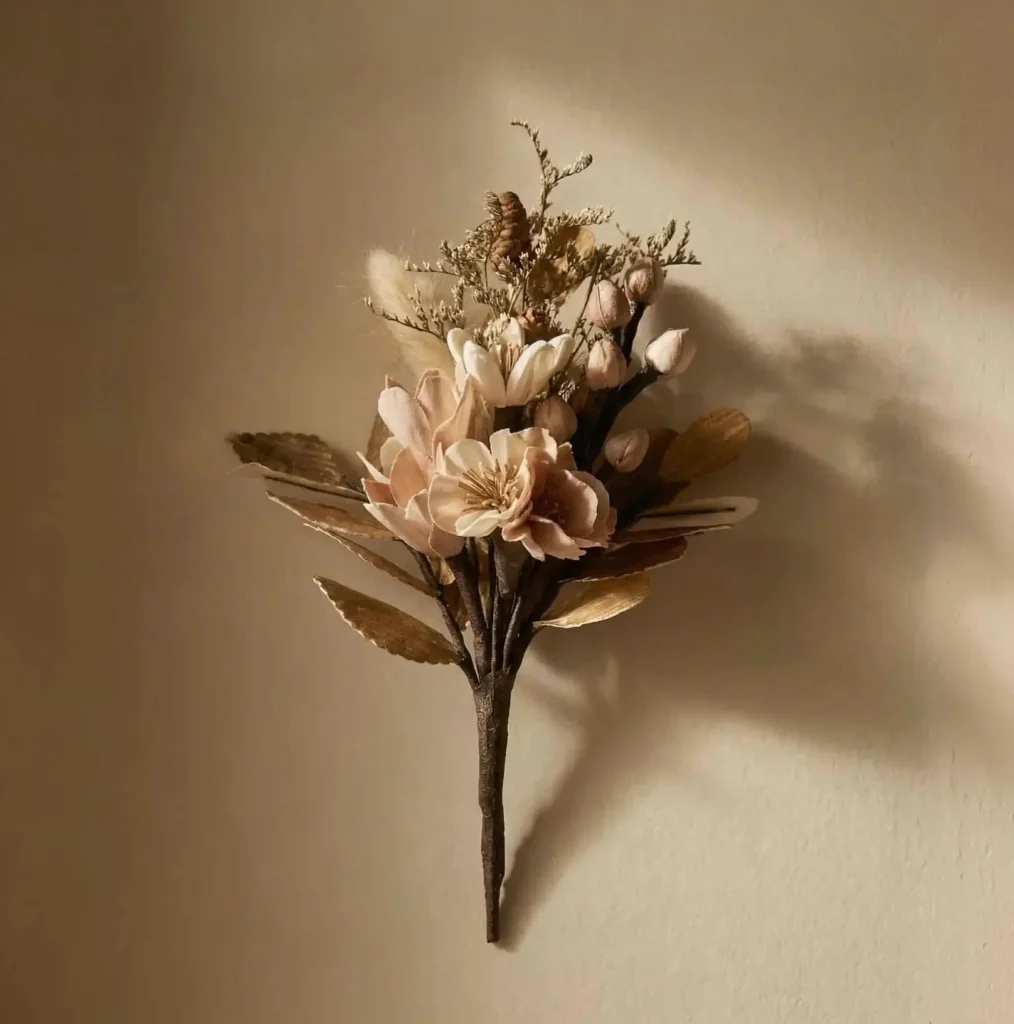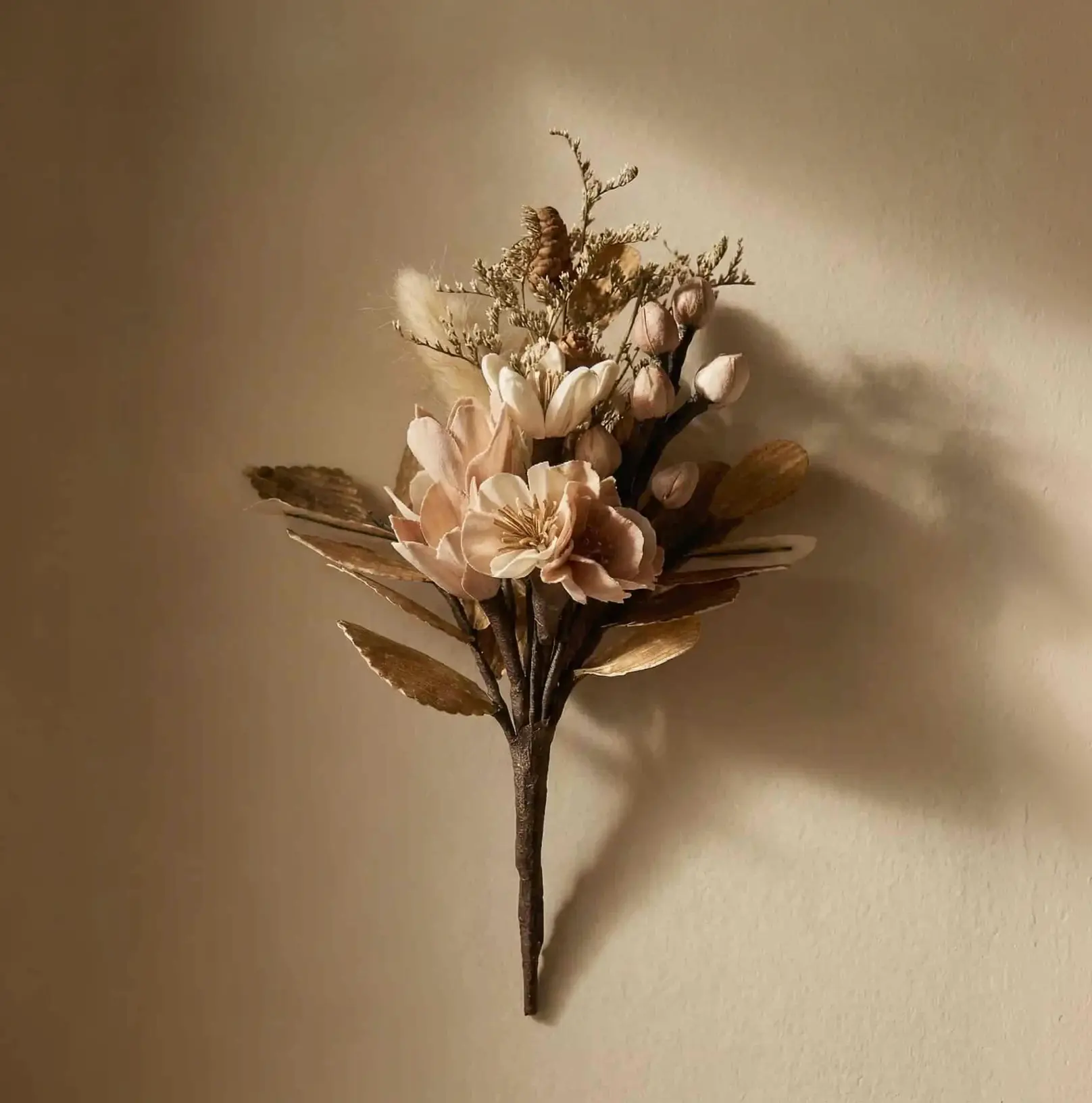
A solar flower diffuser is a handcrafted flower made from sesbania wood that works as a natural aroma diffuser. Just add 2–3 drops of essential oil to the petals. The porous sesbania wood gradually absorbs the oil and releases the aroma into your room — no electricity, no smoke, no heat. This collection is handmade by the Ban Krot community enterprise in Ayutthaya, where AROMAYU travelled in person to co-design the prototype flowers.
If you are looking for a simple, safe way to bring aroma into your home, a sesbania wood flower diffuser does two jobs at once: it is a beautiful decorative piece and a working diffuser. This article walks you through where this craft comes from, how to use it so the aroma lasts, and why sesbania wood has become the diffuser material so many people are looking for.
How does a solar flower diffuser work, and why does it need no electricity?
The heart of a solar flower diffuser is sesbania wood, which has a light, porous structure rather like a natural sponge. When you add essential oil, the wood absorbs and holds the liquid, then slowly releases aroma molecules across the wide surface of its petals. This is called passive diffusion — it relies on evaporation at ordinary room temperature, so it needs no electricity, no heat, and no water mist like an ultrasonic diffuser.
The advantage of passive diffusion is safety and consistency. There is no cord to worry about and no flame, so you can place it in your bedroom, home office, or reading corner with complete peace of mind. It follows the same thinking as AROMAYU's fish diffuser , which is likewise designed to be refillable, smoke-free, and electricity-free.
What is sesbania wood, and why does it suit aroma diffusion?
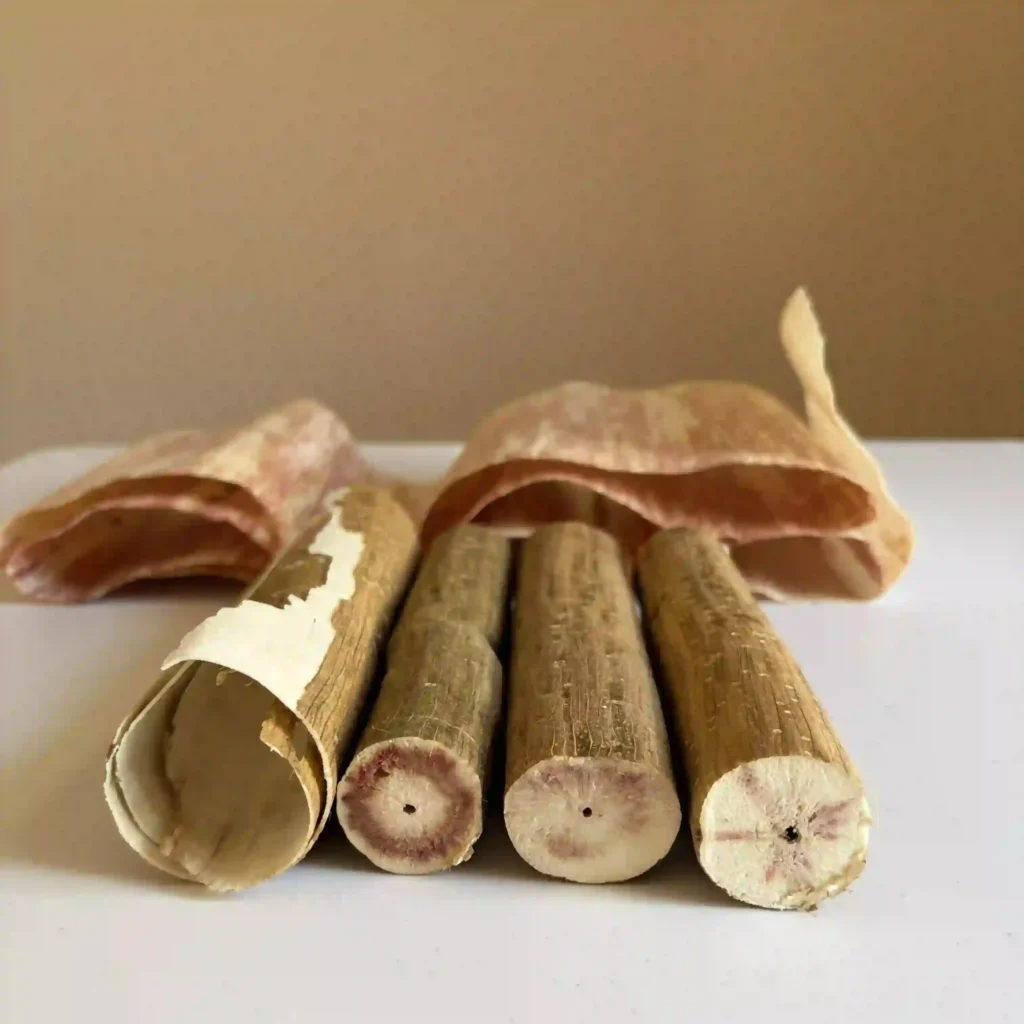
The sesbania wood used to make these flower diffusers comes from the rattlepod plant (Sesbania cannabina) — an annual legume that thrives in the waterlogged lowlands and canal banks of central Thailand. Its standout feature is the core of the stem: clean white, extremely light, soft and porous. Inside, the wood is packed with a vast number of tiny water-conducting channels, and that is exactly what makes sesbania such an excellent diffuser material. Farmers in Ayutthaya have been turning this knowledge into handmade flowers since the Ayutthaya period, passing the craft down for more than 100 years, and today it is produced as a serious craft industry mainly in Ayutthaya (MGR Online)
There are three main reasons sesbania wood suits aroma diffusion. The first is absorbency : the wood is highly porous, so it takes up essential oil faster and in greater quantity than an ordinary reed stick, with the liquid drawn through the wood by capillary action. The second is surface area : when the wood is sliced into thin sheets and curled into petals, the surface available for evaporation increases enormously. Because the evaporation rate scales with the wetted surface area, the aroma carries better than it would from a bare reed stick (Scientific Reports, 2017). And the third is natural materials : sesbania is biodegradable and gives a soft, minimal look that suits home decor. A single sesbania stem yields roughly 3–4 flowers, and the raw material is seasonal — harvested only once a year, between August and October — which makes every flower valuable and means stock has to be planned well in advance.
The sesbania wood AROMAYU chooses has a naturally purple-tinged tone, and that comes from the plant's own defence mechanism. When the stem is bored into by insects, the plant produces anthocyanins — natural pigments in the purple-red range — to protect the tissue, so the wood in that area turns purplish on its own, with no dyeing involved. The result is petals in a soft, warm violet shade that reads as genuine craft, unlike mass-produced artificial flowers, which are usually dyed in bright colours.
What it takes to make a single aroma-diffusing flower
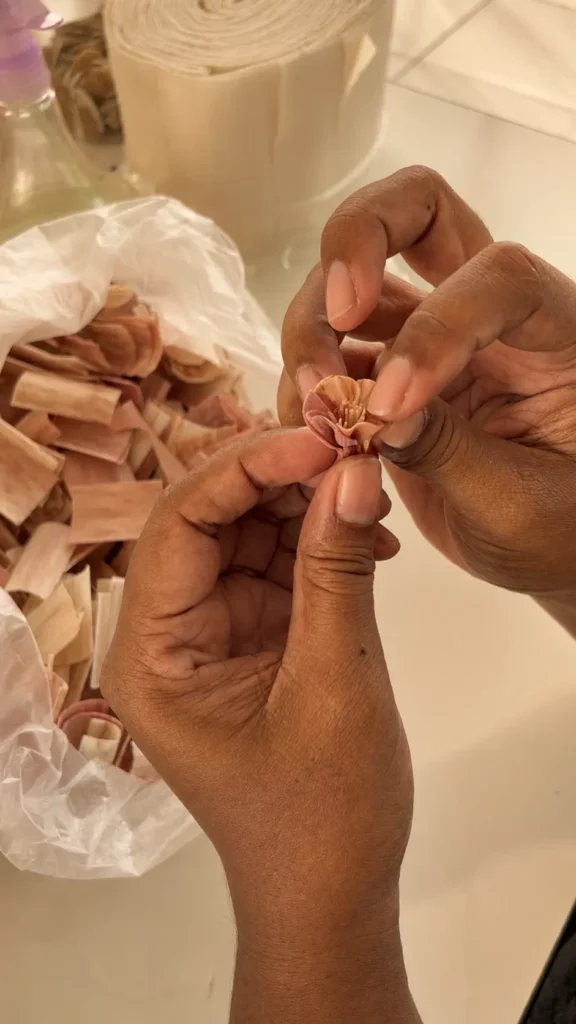
Every sesbania flower is entirely handmade, through four main stages:
- Selecting — choosing mature sesbania stems, for wood that is dense and white
- Peeling — stripping away the brown outer bark until only the pure white core remains
- Slicing — using a sharp knife to shave the wood into sheets as thin as paper, producing what the artisans call sesbania paper
- Shaping — folding, curling, and binding the sheets with thread until they take the form of flowers such as roses, jasmine, or frangipani
What makes it special is that every stage relies on skill and patience — no machine can replace the human hand. Even the sesbania bark left over from slicing is developed further into mulberry-style paper by Phranakhon Si Ayutthaya Rajabhat University, keeping waste to an absolute minimum (Daily News)
The story of the Ban Krot community enterprise, Ayutthaya
The Ban Krot community enterprise, in Ban Krot subdistrict, Bang Pa-in district, Ayutthaya province, was established with support from the Bang Pa-in District Agricultural Office and is chaired by Khun Jintana Khotcha. The community's sesbania wood flowers are in demand both in Thailand and abroad, particularly in Japan, China, and the United States.
What makes Ban Krot's work special is how the income is shared across the community. More than 20 households work together, each making flowers according to their own strengths — from older artisans whose handwork is still exquisite, to people who want to earn extra income from home. Most recently, in December 2025, a Ban Krot community enterprise learning centre opened, with the Faculty of Science and Technology at Phranakhon Si Ayutthaya Rajabhat University helping to develop paper from the leftover sesbania bark, adding value and reducing waste.
AROMAYU travelled to the Ban Krot community enterprise to work directly with the artisans. We asked the community to shape rice paddy herb flowers (Rice Paddy Herb, Limnophila aromatica) and geranium flowers — blooms drawn from the essential oils blended into our products. These were then arranged with real dried flowers into a bouquet, creating an aroma-diffusing arrangement that carries both a story and a scent in a single piece.
How to use a solar flower diffuser so the aroma lasts
Using a sesbania wood flower diffuser is very easy, but a few small tricks will keep the aroma going longer and the flowers looking as good as new. Just follow these steps.
- Add 2–3 drops of essential oil directly onto the petals. Choose whichever scent you like. This bouquet was designed to pair especially well with Floral Bloom.
- Add a little at a time; don't soak it. The rate of diffusion is set by surface area, temperature, and airflow — not by how much oil you use. Pour on too much and the top notes flash off all at once, leaving a flatter aroma behind. Adding a little at a time and topping up when it starts to fade gives you a more consistent aroma and better value.
- Keep it in the shade, away from direct sunlight and high humidity. Strong sunlight and humidity will fade the colour of the flowers and make the aroma evaporate faster. A shaded corner with gentle airflow is the ideal spot.
- Top up the aroma whenever you like. When you notice the aroma starting to fade, simply add a few more drops and the flowers go back to diffusing again.
There are two more things worth knowing from the start, so nothing takes you by surprise and your flowers last longer. First, over the initial few days the sesbania flowers will absorb essential oil quickly as the wood saturates before it begins diffusing at full strength — so if the oil level drops fast at first, that's completely normal. Second, lifespan: with long use, the pores in the sesbania wood can gradually clog with oil residue and diffuse less effectively. If you notice the flowers turning a dark brown, or the aroma staying faint even after topping up, that's your sign it's time for a fresh set.
The aroma unfolds in layers, following the principle of fragrance notes: top notes evaporate fastest, followed by the slower middle and base notes. Because this is cold diffusion with no heat involved, what you get is soft and natural. AROMAYU sells this bouquet as the Floral Set in the Uplift & Renew range, designed to bring brightness and positive energy to your space. It suits a relaxing atmosphere in a rest corner or a home working nook.
How does a solar flower diffuser differ from reed diffusers and ultrasonic diffusers?
A lot of people wonder how a sesbania wood flower diffuser differs from other kinds of diffuser. The table below makes the comparison
clearer at a glance.
| Feature | Solar Flower Diffuser (sesbania wood) | Reed diffuser | Ultrasonic diffuser |
|---|---|---|---|
| Needs electricity | No | No | Yes |
| Smoke / heat | None | None | None (but produces water mist) |
| Works as decor | A beautiful flower bouquet | A bottle with reeds | An electrical appliance |
The strength of a solar flower diffuser is that it is decor and diffuser in one piece, carrying a tangible story of Thai craft. You get more than an aroma — you get an object that helps support community artisans.
Frequently Asked Questions
It is a handcrafted flower made from sesbania wood that works as a natural aroma diffuser. Simply add essential oil to the petals and the porous wood gradually releases the aroma into the room, with no electricity and no smoke.
Any essential oil you like. AROMAYU's bouquet was designed to pair especially well with Floral Bloom, but you can choose a relaxing or a refreshing tone as you prefer.
We recommend 2–3 drops at a time, applied directly to the petals. Adding a little at a time and topping up when the aroma fades works far better than pouring it all on at once, because oversaturating dilutes the aroma.
Keep it in the shade with gentle airflow, away from strong sunlight and high humidity, to preserve the colour of the flowers and help the aroma last longer.
They are handmade by the Ban Krot community enterprise in Bang Pa-in district, Ayutthaya province, which has carried forward the craft of sesbania (rattlepod) flower-making for more than 100 years. AROMAYU co-designed the prototype flowers directly with the community's artisans.
It depends on how often you use and refill it, but generally several months. As the pores in the sesbania wood begin to clog with oil residue, the flowers gradually turn a darker brown and diffuse less even after topping up — that is your sign to replace them.