Ten Years on the Path of the Breath: From the Day I Closed My Eyes and Couldn't Find My Own Nose
Breath awareness sounds simple enough — just notice the breath coming in and going out. But the first time I joined a Vipassana course, I couldn't sense my breath at all. When I closed my eyes, I didn't even know where my own nose was, where the air was touching, or what "watching the breath" was supposed to feel like. The third day of practice was full of struggle. All I could think was, "What am I even doing here?" I wanted to run, to go home, to stop sitting with myself. Years later, once I had come to know and seriously study aromatherapy, I looked back at myself on that day and a question arose: could scent help a beginner sense the breath more easily? This is my true story, and the beginning of the idea behind AROMAYU.
How Can Scent Help You Practice Breath Awareness?
Scent works as a sensory "marker." Because we perceive a scent together with the in-breath, the otherwise invisible breath gains something we can actually notice — helping a beginner know, "I am breathing right now." Scent does not create mindfulness or concentration for us, it is not part of Anapana in the tradition of S. N. Goenka, and it is not a shortcut to calm. It is simply a gentle, everyday aid for people who are not yet used to sensing the breath.
From Pressure on the Factory Floor to Sitting With the Breath
Before I began blending essential oils, I worked as a production supervisor in a factory. My days were filled with targets, numbers, quality, on-the-spot problem-solving, and responsibility for an entire line of people.
Even after my body came home, my mind was still at the factory. I was easily irritable, kept replaying work in my head, and didn't sleep well.
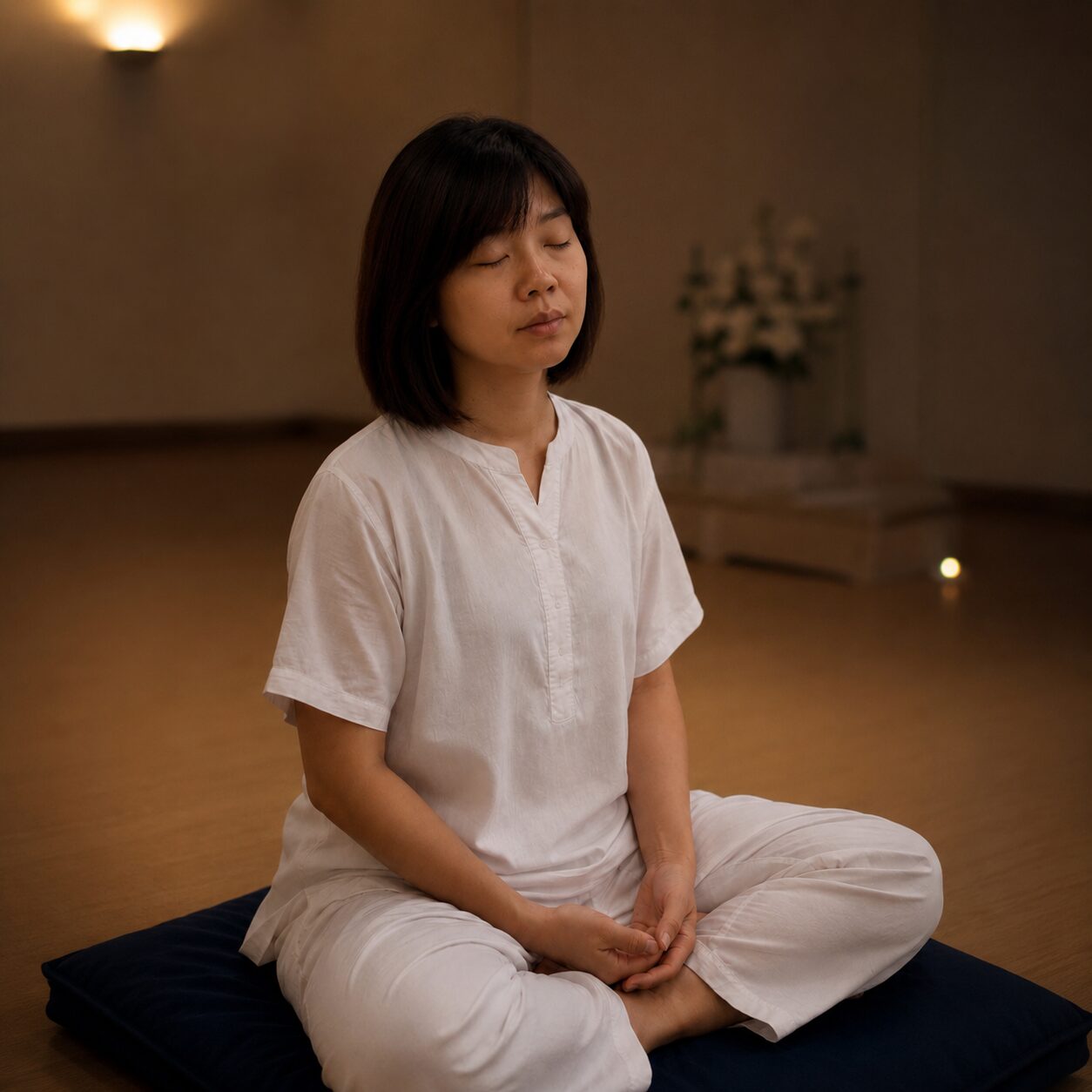
When I realised I had to find a way to care for my mind, I decided to join a 10-day Vipassana course in the tradition of S. N. Goenka. In the first phase, what I was taught was Anapana — observing the natural breath around the nostrils, below the nose, and above the upper lip.Read about Anapana from the Vipassana Research Institute)
Note: The account in this article is the author's personal experience. It does not represent, is not affiliated with, and is not endorsed by any Vipassana centre or organisation.
The First Time I Closed My Eyes, I Didn't Even Know Where My Nose Was
In Anapana practice, we are not taught to control the breath. There is no counting of seconds in or out, and no trying to make the breath deeper. All we have to do is notice the natural breath as it comes and goes. But for me, even that was very hard.
The first time I closed my eyes, I couldn't sense my breath at all — to the point of not knowing where my own nose was, where the air was touching, or what feeling I was meant to catch. Sitting brought no calm, only effort, confusion, and the question of what I was even doing.
Anapana Is Not About Regulating the Breath
In the tradition I practised, Anapana is observing the natural breath — not forcing it long or short, not setting a rhythm, and not using scent, sound, or imagery as an aid. If the breath is long, you know it is long; if it is short or subtle, you simply notice it as it is.
So the way of using scent described in this article is not the practice of Anapana, and should not be mixed with the teachings of a Vipassana course.
Day Three: All I Could Think Was "What Am I Doing Here?"
By the third day, the feeling inside grew much heavier. Sitting there was agony — I couldn't sense the breath, the mind ran everywhere, the body ached, every thought resisted, and in my head there was only, "What am I doing here?"
I wanted to escape the practice, to return to my old life, to do anything except sit with myself. But when I had struggled to exhaustion and there was nothing left to run to, I slowly began to see what was inside.
"When there was nowhere left to run, I didn't just watch my breath — I began to observe my own thoughts."
After the Resistance Wore Out, I Slowly Saw Myself
I saw craving. I saw greed. I saw the habit of choosing what I liked and resisting what I didn't. I saw parts of myself I had never wanted to admit. Watching the breath, then, didn't only show me the air coming and going — it slowly revealed the workings of my own mind.
That experience didn't change me in ten days, and I didn't walk out a perfectly calm person. Everything took many more years of continued practice. But that day made me understand that "just watching the breath" may not be simple at all for a beginner.
More Than Ten Years of Slowly Coming to Know the Breath and the Mind
It took more than ten years of continuous practice before I could clearly sense, "this is the in-breath and this is the out-breath." What slowly changed was not only my ability to feel the sensation at the nostrils, but seeing where my mind likes to run, what it resists, and how it creates its own suffering.
I learned that practice isn't about making the mind never wander, but about knowing that it has wandered — and gently returning, without being angry at myself. This became an important foundation before my path met another discipline: aromatherapy.
Years Later, When I Came to Know Aromatherapy
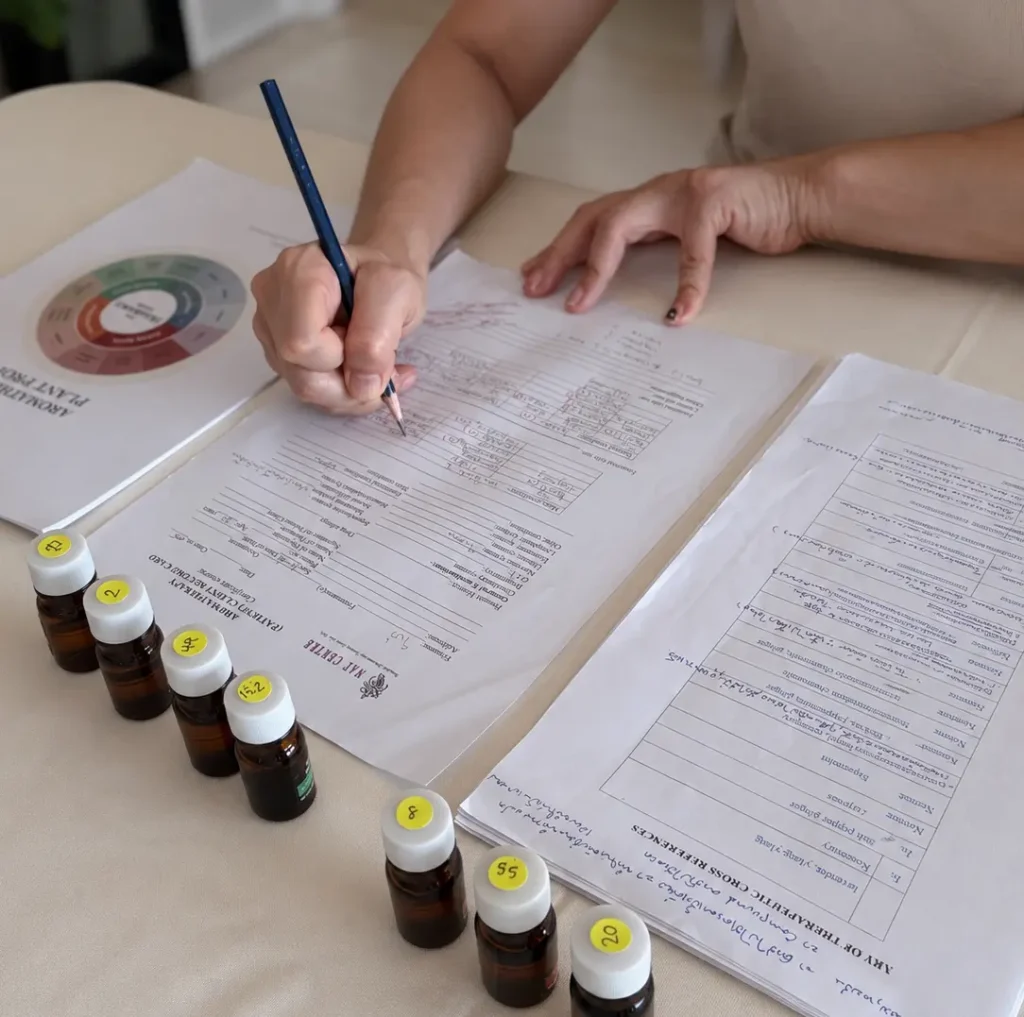
When I came to know aromatherapy, I began to notice that scent could change the atmosphere, the feeling, and the way we perceive the moment in front of us. Some scents make us feel fresher, some soften the mood around us, and some take us back to a memory in an instant.
With a background in chemistry, I didn't stop at "this smells nice" or "this feels good." I began to study seriously the chemical composition of each essential oil, along with the relationship between the sense of smell, the brain, memory, the nervous system, and emotion.
I learned that a single scent isn't made of just one compound, but of many components, each with its own character and aroma. My knowledge of chemistry, the craft of blending, and my experience of breath practice slowly came together.
From Choosing Scents I Liked to Studying Their Composition Seriously
Perceiving scent is a deeply personal experience. The same scent may feel comforting to one person and unpleasant to another, because each of us carries different memories, experiences, and sensitivities. At the same time, each essential oil has a different chemical makeup depending on its species, origin, extraction method, and environment.
All of this showed me that blending shouldn't begin from a sweeping claim that "this scent is good for everyone," but from understanding the person, the emotion arising, and the moment in which they want to care for themselves.
Read more: How scent relates to emotion and memory
Because I Once Couldn't Catch My Breath, I Wanted Scent to Help Beginners
As I studied scent more deeply, I thought back to myself on the very first day of practice. The day I closed my eyes and couldn't sense the breath. The day I didn't know where the air was touching. The day "being with the breath" was too abstract to grasp.
And so a question arose: if there were a gentle scent that a person perceives together with the in-breath, could it help them notice more easily that they are breathing right now?
Scent doesn't create mindfulness for us, isn't a shortcut to concentration, and isn't part of traditional Anapana practice. But it may act as a small signal for ordinary people who don't yet know how to begin sensing the breath.
"Scent doesn't breathe for us — but it may help us know that we are breathing."
How to Use Scent as a Starting Point for Breath Awareness
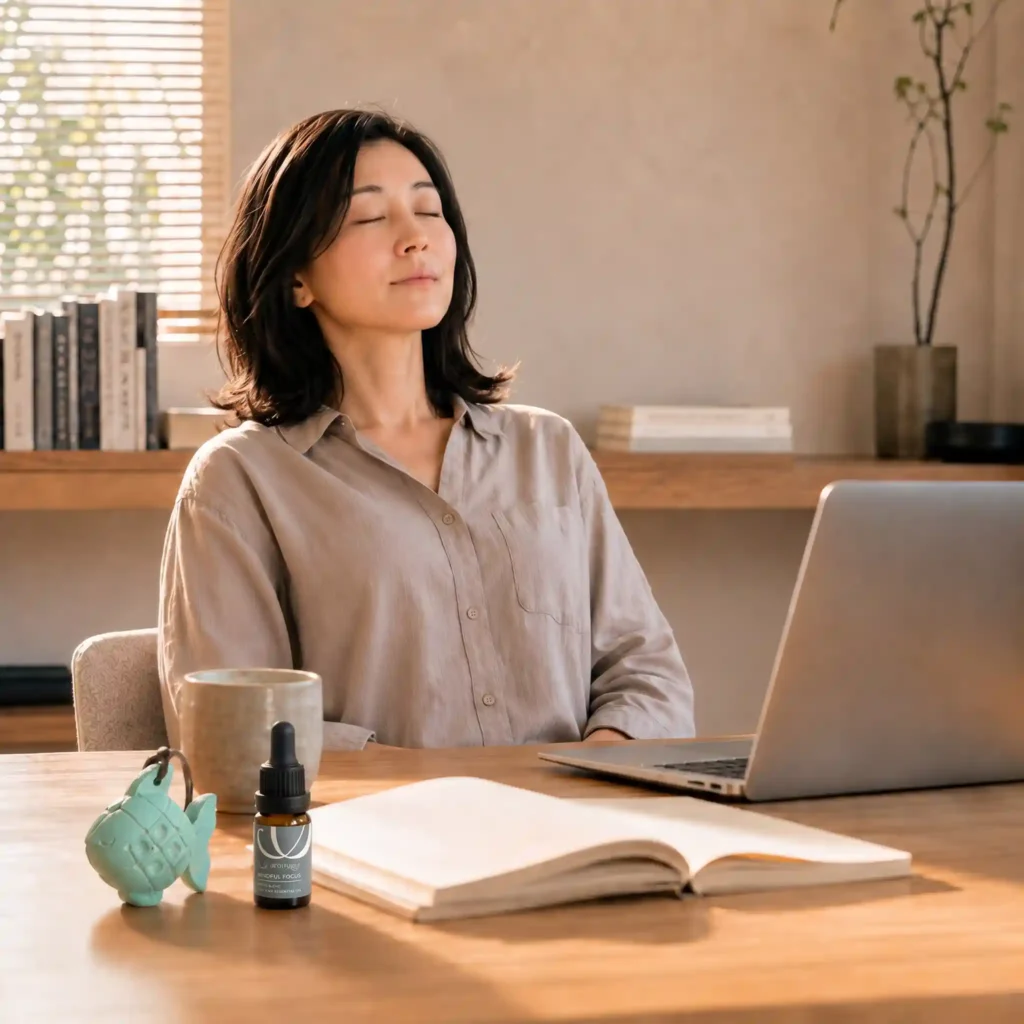
This is a short everyday activity, not a teaching of Vipassana or Anapana, and there is no controlling the breath. The aim is simply to notice scent and the natural breath for a brief moment.
1. Pause Whatever You're Doing for a Moment
Put down your phone, stop typing or stop what you're doing, and sit or stand in a comfortable position. You don't have to close your eyes.
2. Choose a Scent You Can Perceive Comfortably
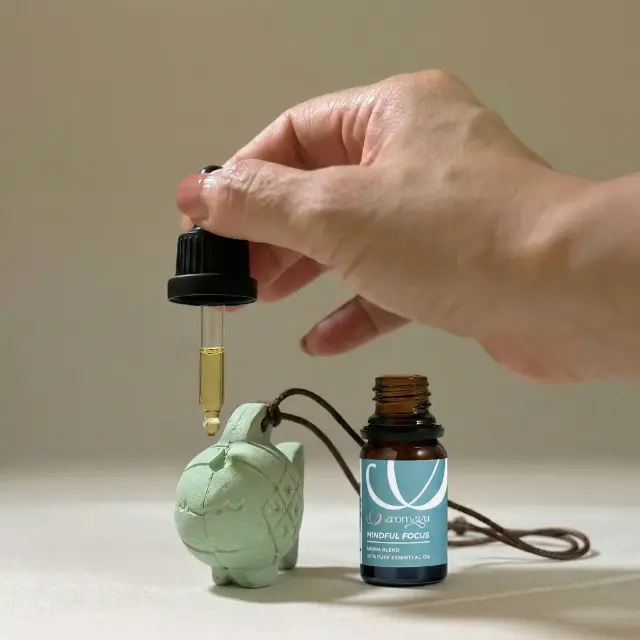
Use a scent at a gentle level — a product designed for smelling, a diffusing material, or a diluted product used as directed on the label. Don't inhale concentrated essential oil strongly or hold it right against your nose.
3. Notice When the Scent Appears With the In-Breath
Don't inhale hard, don't deepen the breath, and don't count. Just notice how, as you breathe in, the scent begins to appear.
4. Notice the Out-Breath
Observe how the intensity of the scent and the sensation around the nose change as you breathe out.
5. When the Mind Drifts, Simply Return
If you notice your mind has wandered to other thoughts, don't scold yourself. Just come back to the scent and the breath on the next round. Knowing the mind has left and being able to return is part of the practice.
Scent Is an Aid, Not a Substitute for Practice or Treatment
This is a boundary I want to make clear. Using aroma to help sense the breath in daily life is not the practice of Anapana in the tradition of S. N. Goenka, and it should not replace the guidance of a teacher or a formal course.
Scent is not intended to treat medical conditions such as anxiety, depression, or sleep problems. That said, aromatherapy research has shown that essential oil aromas can genuinely influence the autonomic nervous system, particularly by activating the parasympathetic response associated with relaxation (see the research: The Effects of Essential Oils on the Nervous System: A Scoping Review) Because of this, scent can be considered part of a holistic approach to wellbeing. Beyond helping you notice your breath, it can also support the nervous system's own relaxation response and help create a moment conducive to pausing.
Precautions When Using Essential Oils
- Do not apply concentrated essential oil directly to the skin — if you want to diffuse a scent, use a diffusing material instead.
- Do not inhale directly from the bottle at close range or inhale strongly and continuously.
- Use in a well-ventilated space.
- Stop use if you experience headache, nausea, irritation, or difficulty breathing.
- Those with asthma, respiratory conditions, who are pregnant, or under medical care should consult a professional.
- Scent and breath-awareness activities are not a substitute for medical or mental-health care.
Scent Doesn't Calm the Mind for Us — But It May Remind Us to Return
Over more than ten years on the path of breath awareness, I slowly came to understand that what matters isn't making the mind never wander, but knowing it has wandered and coming back.
When I came to study aromatherapy, I found that scent might be the very tool I wished I'd had at the beginning. Scent isn't a shortcut, doesn't replace practice, and isn't necessary for meditation. But in a daily life full of screens, work, and responsibilities, a single scent may act as a small signal that says: right now, you can pause for a moment; right now, you are breathing; and right now, you are back here.
This is one of the intentions behind AROMAYU. We want to blend scents that aren't only fragrant, but that help create a moment in which a person can return to themselves once again.
Begin with a single breath.
Explore the stories of scent, emotion, and how to create your own moments of pause.
Frequently Asked Questions About Breath Awareness With Scent
In the tradition of S. N. Goenka that the author practised, Anapana is observing the natural breath. It does not specify how many seconds to breathe in or out, and it does not force the breath to be deeper or longer.
The natural breath can be very subtle, especially when the body is still. Someone unfamiliar with it may not know where the air is touching. This isn't abnormal and doesn't mean you can't practise — it simply takes time and continued observation.
No. Anapana in this tradition uses the natural breath without scent, sound, or any other aid. The use of scent in this article is a daily-life activity, not a practice within a Vipassana course.
Scent is perceived together with the in-breath, so it may act as a marker that helps a beginner know they are breathing right now. Scent doesn't create mindfulness or concentration automatically, but it helps give the invisible breath a signal that is easier to notice.
Choose a scent you can perceive comfortably — not sharp, not headache-inducing, and without negative memories attached. There is no single scent that suits everyone, because responses to scent differ with each person's experience.
Use only products that are diluted and labelled as safe for skin, such as an Aroma Roll-on. Do not apply concentrated essential oil directly to the skin, as it may cause irritation or contact allergy.
Written by Pornpan Tonsarnsanittipong, Founder and Blender of AROMAYU